Nutritional System

Whole foods work through relationships.

COTI begins with whole foods.
Each becomes a Node, takes a Role,
and becomes part of a Module.

Nature is never
a single nutrient.

Vitamin C exists within a broader whole-food matrix — alongside polyphenols, organic acids, minerals, fiber, naturally occurring sugars, and other compounds.
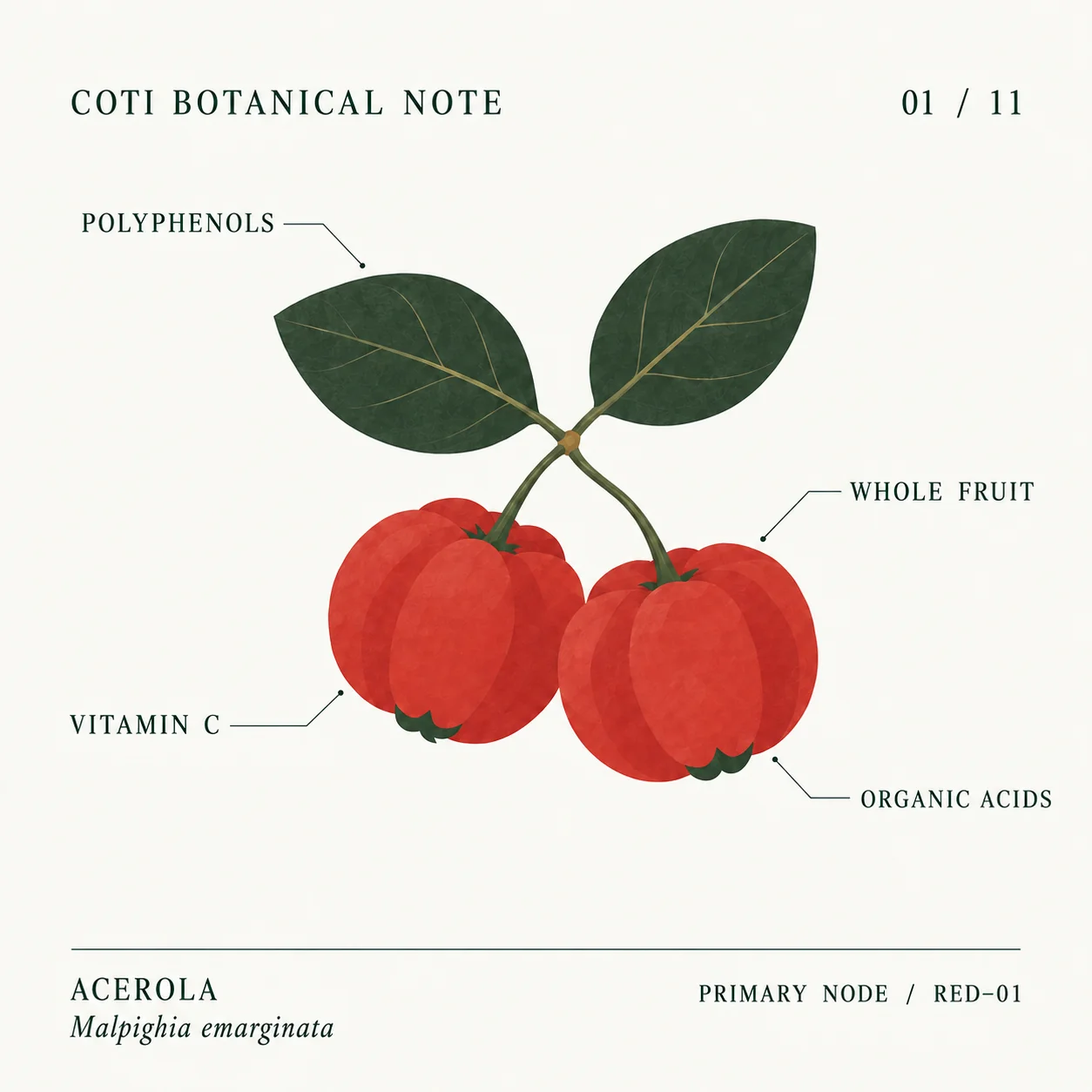
COTI Botanical Note, plate 01/11: Acerola (Malpighia emarginata), the Primary Node in RED-01, with its whole fruit annotated for Vitamin C, Polyphenols, and Organic Acids.

COTI reads each
whole food as a Node.

A Node is one whole food within the COTI system. Data describes what it contains and how its elements relate.

Acerola whole-food Node: selected compounds reported in acerola Illustrative radial network with Acerola at the center, surrounded by seven groups of compounds reported in acerola research: Vitamin C (ascorbic acid); Anthocyanins (cyanidin-3-O-rhamnoside, pelargonidin-3-O-rhamnoside); Organic acids (malic, citric, tartaric); Fiber and sugars (pectin, a soluble fiber, and naturally occurring sugars); Minerals (potassium, magnesium, calcium, iron, zinc); Carotenoids (β-carotene, lutein, β-cryptoxanthin, α-carotene); and Other polyphenols (chlorogenic acid, catechin, rutin, quercetin glycosides). Composition varies with cultivar, ripeness, and processing. NODE Acerola Food Matrix Vitamin C Anthocyanins Organic acids Fiber & Sugars Minerals Carotenoids Other Polyphenols Ascorbic acid Cyanidin-3-O-rhamnoside Pelargonidin-3-O-rhamnoside Malic acid Citric acid Tartaric acid Pectin(soluble fiber) Naturallyoccurringsugars Potassium Magnesium Calcium Iron Zinc β-Carotene Lutein β-Cryptoxanthin α-Carotene Chlorogenicacid Catechin Rutin Quercetinglycosides
Selected compounds reported in acerola
Vitamin C
Ascorbic acid
Anthocyanins
Cyanidin-3-O-rhamnoside, Pelargonidin-3-O-rhamnoside
Organic acids
Malic acid, Citric acid, Tartaric acid
Fiber & Sugars
Pectin (soluble fiber), naturally occurring sugars
Minerals
Potassium, Magnesium, Calcium, Iron, Zinc
Carotenoids
β-Carotene, Lutein, β-Cryptoxanthin, α-Carotene
Other Polyphenols
Chlorogenic acid, Catechin, Rutin, Quercetin glycosides

Every Node has a role.

Each whole food plays a distinct role within the composition.

Nodes are positioned. A module is composed.

A Module organizes selected whole-food Nodes by Role around a distinct nutritional purpose.
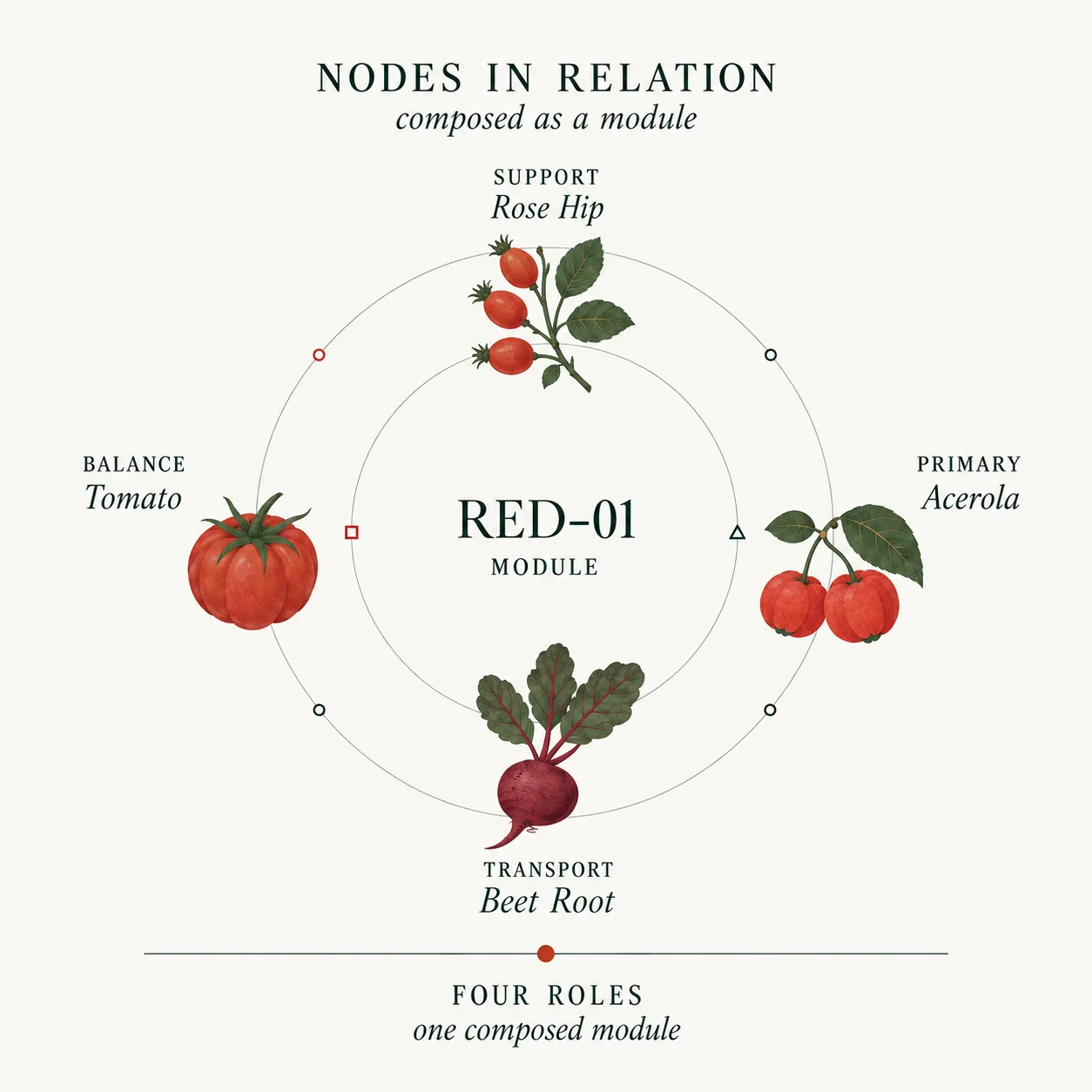
RED-01 module diagram, nodes in relation composed as a module: Acerola (Primary) at the center, with Rose Hip (Support), Tomato (Balance), and Beet Root (Transport) arranged around it — four roles, one composed module.

The System Continues

The Palette holds more.

Enter the Palette